 |
 |
 |
||
| Process | Launching | ||
|
Hurro – a small boat traditionally used by the Mohannas for fishing and transportation – is often seen moored alongside their houseboats. These boats serve as the primary source of income for their families, playing a crucial role in their fishing activities.
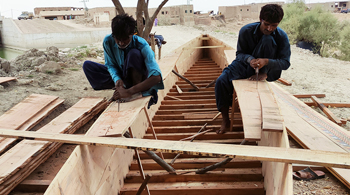
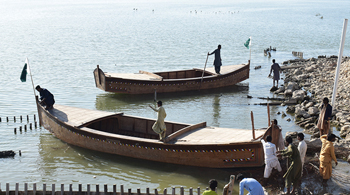
Under the CPF project funding, the Heritage Cell has commissioned the construction of eight new Hurros, gifting them to the community as shared assets. Typically, a Hurro features a long, narrow body designed for carrying large hauls of fish while gliding smoothly across the water. They generally measure around 30 feet in length and 5 feet in width, though variations in size exist. The boat-building process begins with crafting the base (taro). Next, two separately assembled side panels are joined to the base, forming the basic structure. To involve the community, local children are invited to paint the side panels in vibrant colors, making the process both engaging and participatory. To secure the base and sides, wooden sections called pussu and munnu are hammered into place using thick nails. Metal supports or jacks help curve the sides and hold the wood firmly without excessive bending before it is securely fastened. The front and back decks are then installed, supported by wooden beams known as addo (thwart), which span the boat’s width. Intricate carvings embellish the inner side panels, each boat featuring unique, hand-carved designs before the final assembly. Once complete, the Hurro is treated with oil and prepared for launch, ready to serve its purpose on the water. |
Community members come together with craftsmen, energetically chanting and cheering as they push and drag the boat into the water. |
||